Traditional ticket booking methods, manual registers and disconnected reservation systems can make it difficult to manage growing transportation businesses. Handling online and offline bookings, tracking seat availability, coordinating multiple routes and maintaining passenger records requires a more organized approach.
This is where bus ticketing software becomes valuable.
A modern bus ticketing system helps transport businesses manage ticket reservations, passenger information, seat availability, route schedules and payment processes through a centralized digital platform.
Whether you operate a small bus fleet, manage a travel agency or run a large transportation network, adopting the right bus booking software can help streamline operations and improve the passenger booking experience.
What Is Bus Ticketing Software?
Bus ticketing software is a digital platform designed to manage bus reservations, ticket sales, passenger information and related transportation operations.
It enables operators and travel businesses to manage booking activity through an organized system rather than relying entirely on manual processes. Depending on the platform, a bus reservation system may include:
- Online bus ticket booking.
- Real-time seat availability.
- Route and schedule management.
- Fare management.
- Online payment integration.
- Agent and counter booking management.
- Passenger information management.
- Booking history and ticket status.
- Revenue reports and analytics.
- Fleet management dashboards.
By bringing these activities together, bus operators can improve coordination between passengers, booking agents and administrative teams.
Why Do Bus Operators Need an Online Bus Booking System?
Managing a transportation business involves several interconnected activities. As the number of passengers, routes and bookings increases, manual management can become more complicated.
1. Managing Multiple Bookings
Handling reservations through phone calls, booking counters and online channels can create coordination challenges. An online bus booking system helps centralize reservation information and makes it easier to manage supported booking channels.
2. Seat Availability Management
Passengers want to know which seats are available before completing a booking. A digital seat availability system helps operators maintain consistent booking information and reduce booking conflicts.
3. Managing Routes and Schedules
Bus operators often manage multiple routes, departure times and fare structures. A centralized bus ticketing platform helps administrators organize route, schedule and booking information from one place.
4. Payment Management
Online passengers expect convenient payment options when purchasing tickets. Integrating a payment gateway supports digital transactions and organizes payment-related booking information.
5. Coordinating Online and Offline Bookings
Many transportation businesses receive reservations from agents and physical counters alongside online bookings. A bus booking management system can coordinate these channels within a unified platform.
10 Important Features of Modern Bus Ticketing Software
1. Online Bus Ticket Booking
An online booking facility allows passengers to search for bus services and reserve tickets through a digital platform without visiting a physical ticket counter.
2. Real-Time Seat Availability
Seat availability is an important component of every bus ticket booking system. A real-time seat management feature helps passengers view available seats and receive booking confirmation.
3. Route and Schedule Management
Route management software helps operators organize multiple routes, departure schedules and service timings through a centralized platform.
4. Fare Management
Fare management helps operators organize ticket pricing according to their business requirements and maintain consistent pricing across booking channels.
5. Secure Payment Gateway Integration
Payment integration allows passengers to complete ticket purchases through supported methods such as UPI, debit and credit cards, and net banking.
6. Agent and Counter Booking Management
A platform that supports agent and counter bookings helps operators coordinate reservations across online and offline sales channels.
7. Passenger Management System
Passenger management features maintain customer details, booking records and reservation history for easier access to relevant information.
8. Automated Reports and Analytics
Reports and analytics provide information about booking activity, revenue, occupancy and operational performance, helping businesses review performance and make informed decisions.
9. Mobile-Friendly Booking Platform
A mobile-friendly bus ticket booking platform allows users to search routes, check seats and complete reservations through smartphones and web browsers.
10. Multi-Operator Support
Transportation aggregators and larger networks can use multi-operator support to organize bookings and transport services across a wider network.
Benefits of Bus Fleet Management and Ticketing Software
Improved Booking Management
Centralized reservation management reduces dependency on disconnected records and makes passenger reservations easier to coordinate.
Better Passenger Experience
Convenient online booking, seat information and instant confirmation can create a smoother passenger journey.
Reduced Manual Administrative Work
Digital booking and reporting processes reduce repetitive administrative tasks and help teams manage information efficiently.
Improved Operational Visibility
Centralized dashboards and reports provide better visibility into booking activity, occupancy and revenue.
Better Coordination Across Booking Channels
Managing online, agent and counter reservations through a unified system improves coordination across every sales channel.
Support for Business Growth
A scalable bus reservation platform can support transportation businesses as they expand routes, booking channels and operational requirements.
How to Choose the Best Bus Ticketing Software in India
Selecting the right bus ticketing software in India requires understanding your transportation business needs. Before choosing a solution, evaluate:
- Booking functionality: Can passengers search routes, select seats and reserve tickets conveniently?
- Seat management: How does the platform manage availability and confirmation?
- Route management: Does the system support your route and schedule requirements?
- Payment integration: Are the supported gateways suitable for your business?
- Offline booking support: Can agent and counter reservations be managed with online bookings?
- Reporting: Are reports available for bookings, revenue and occupancy?
- Mobile experience: Is the booking experience usable on smartphones?
- Scalability: Can the solution support future growth?
- Customization: Can it support your operational workflows?
- Technical support: Are implementation, maintenance and ongoing support available?
The best solution is the one that addresses your actual operational challenges and supports your business goals.
Why Choose a Customized Bus Ticketing Solution?
Every transportation business operates differently. A local bus operator, an intercity transport company and a multi-operator travel network may have different requirements for ticketing, passenger management and administration.
A customized bus booking system can support:
- Customized booking workflows.
- Web and mobile booking applications.
- Route and schedule administration.
- Payment gateway integrations.
- Agent and counter booking facilities.
- Passenger booking history.
- Administrative dashboards.
- Business-specific reporting.
Working with an experienced software development company can help businesses define the required functionality before implementation.
Bus Ticketing & Fleet Management Software by Omspire Technology
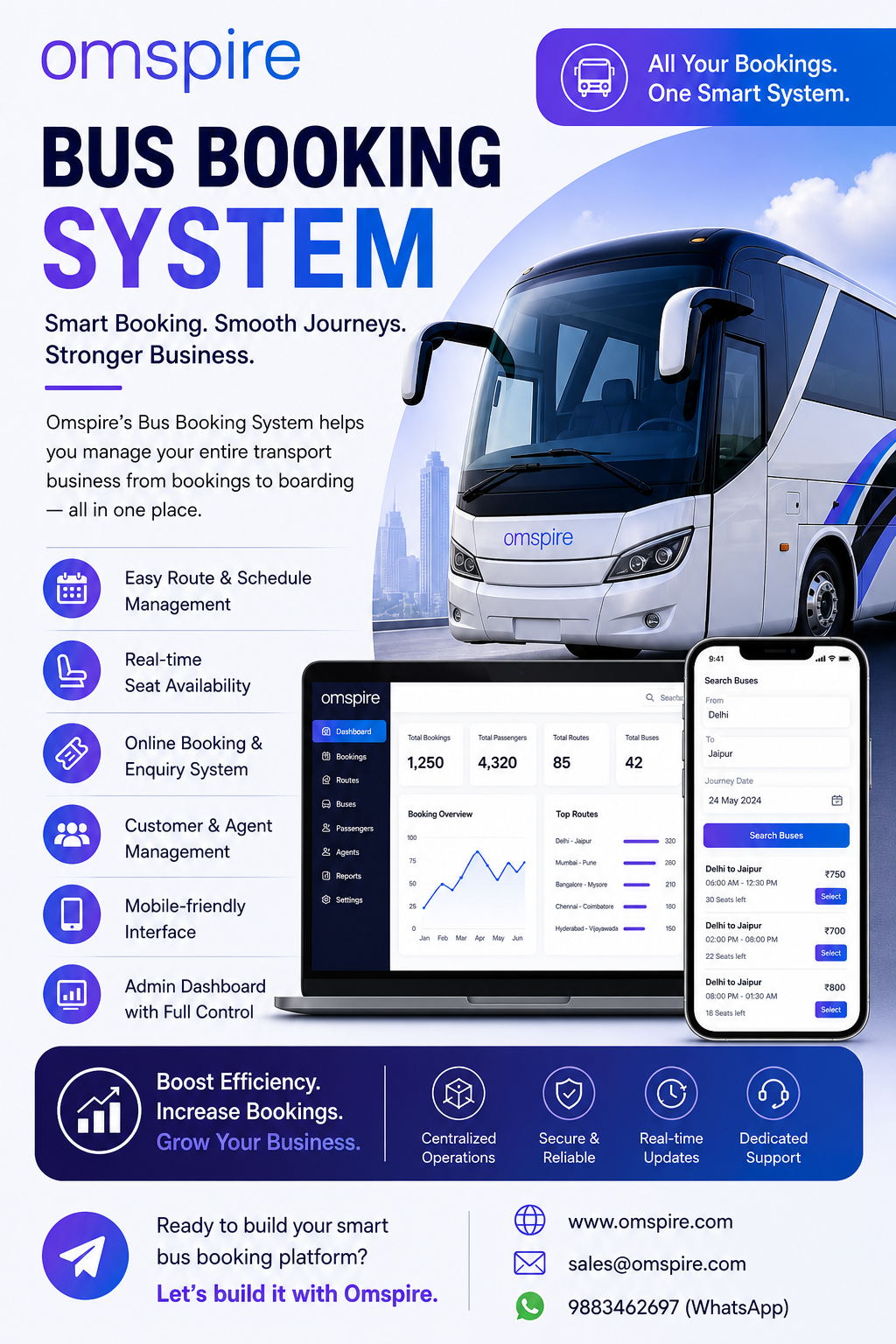
Bus Ticketing & Fleet Management Software by Omspire is designed to help transport businesses digitize ticket bookings, organize routes and schedules, manage passenger reservations and improve operational visibility.
The platform includes online ticket booking, real-time seat availability, route and schedule management, secure payment gateway integration, agent and counter booking management, passenger information, automated reports and multi-operator support.
The solution also includes a cloud-based booking platform and an administrative dashboard for fleet management.
Real-World Project: JD Bus
Omspire's JD Bus passenger application provides a mobile booking experience with route search, seat selection, secure ticket purchases, instant booking confirmation and access to booking history.
Explore the Bus Ticketing & Fleet Management Software solution or learn more about the JD Bus project through the Omspire product page.
The Future of Digital Bus Transportation Management
Technology will continue to influence how transportation businesses manage bookings and passenger services. Important areas of development include:
- Mobile-first ticket booking experiences.
- Integrated digital payment systems.
- More connected reservation channels.
- Centralized route and schedule administration.
- Improved booking and revenue analytics.
- Digital passenger communication.
- Scalable transportation management platforms.
As passenger expectations and transportation operations evolve, suitable digital tools can help bus operators improve service delivery and manage their businesses more effectively.
Frequently Asked Questions (FAQs)
1. What is bus ticketing software?
Bus ticketing software is a digital platform that helps transport operators manage ticket reservations, passenger information, seat availability, routes, schedules and payments.
2. What are the benefits of online bus booking software?
It allows passengers to search services, check available seats and purchase tickets digitally while helping operators organize reservations and reduce manual work.
3. Can bus ticketing software manage multiple routes?
Yes. Platforms with route and schedule management capabilities can organize multiple routes, service timings and related booking information.
4. Does bus reservation software support online payments?
Many modern systems support payment gateway integration. Available payment methods depend on the provider and system configuration.
5. Can bus operators manage online and counter bookings together?
Yes, when the selected platform supports agent and counter booking management alongside online reservations.
6. What is the difference between bus ticketing and bus fleet management software?
Ticketing software focuses on reservations, passenger bookings, seat availability and ticket sales. Fleet management software focuses on transport assets and operational activities. Some platforms combine both capabilities.
7. Is bus ticketing software suitable for small transport businesses?
Yes. Small and growing operators can benefit from digital booking and reservation management. The solution should match their fleet size, booking requirements and budget.
8. How much does bus ticketing software cost?
Cost depends on features, customization, users, integrations, deployment and ongoing support. Contact the provider for a requirement-based quotation.
9. Can bus ticketing software be customized?
Depending on the provider and project scope, the software can support specific booking workflows, payment integrations and administrative requirements.
10. How can I choose the right bus ticketing software provider?
Evaluate product features, booking experience, integration capabilities, scalability, customization options, support and relevant project experience.
Conclusion
Managing a transportation business requires effective coordination between passengers, booking channels, routes, schedules and administrative operations. Traditional manual processes can become difficult to manage as booking volumes and business requirements increase.
The right bus ticketing software helps transport businesses organize reservations, simplify ticket booking, improve passenger experiences and gain better operational visibility.
Ready to digitize your bus booking operations?
Explore Omspire's Bus Ticketing & Fleet Management Software and discover how a digital ticketing platform can support your transportation business.